

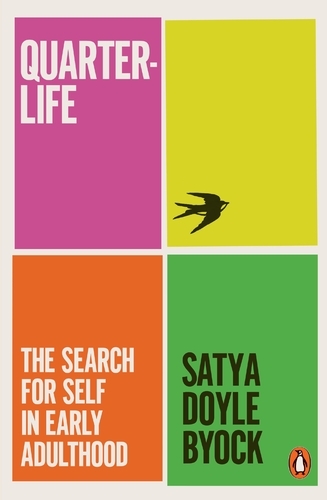
I read Satya Doyle Byock’s Quarterlife in a dentist’s waiting room over the course of four appointments for a root canal. Having weathered my own quarter-life crisis when I pivoted from a career in accounting to writing in search of meaning, it drew me in. Rather quickly, I realised that ‘meaning’ doesn’t always keep the lights on, and found myself suddenly navigating the turbulent rapids of trying to make a living from what I love.
Byock, a psychotherapist, has spent her career listening to the quiet desperation of people aged 16 to 36. She argues that the quarter-life crisis isn’t a sign of failure to launch, but a necessary and non-linear developmental stage that society often overlooks.
The book unfolds in the tradition of a therapist documenting her sessions, a narrative style I have loved since first reading Lori Gottlieb’s Maybe You Should Talk to Someone. There is a certain voyeuristic excitement to this format, like being a fly on the wall in a therapist’s office. As you follow her patients’ journeys, you are relieved to see your private anxieties playing out in the lives of others. It is relatable, which makes you feel much less isolated in your confusion.
The Myth of the Incremental Staircase
Byock writes, ‘As much as my peers and I had been led to believe that life is a tidy, incremental staircase towards certain goals—career advancement, marriage, home ownership—at some point we each discover that it is not.’
Many of us enter the job market only to find the doors bolted shut. We find ourselves either unable to secure employment or accepting underemployment for financial survival. There is something incredibly humbling—if slightly humiliating—about watching peers who perhaps struggled in the classroom thrive in business or sports, or worse, in the same jobs you can’t secure because they know someone who knows someone. No one prepares you for that, or for the total disorientation of finding yourself in the wrong career. Perhaps you’re even in the right one, but the job is nothing like you thought it would be.
For women, the quarter-life period is particularly fraught. It encompasses the bulk of their fertile years, meaning questions of partnership and childrearing loom large. This is more so because society socialises women to prioritise marriage and family life as a bridge to stability. This spikes the feverish anxiety of wanting to be chosen, which worsens as the waiting prolongs. For others, it is the contrast—the depression and overwhelm of unpaid, underappreciated domestic and emotional labour for the foreseeable future.
Realising that ticking these societal boxes does not guarantee happiness is a brutal awakening. It forces a woman to learn that her joy is her own responsibility—something she must carve out and advocate for, even at the risk of appearing selfish to those who benefit from her compliance.
One of the reasons the quarter-life period is so challenging for everyone is that we have learned, or have witnessed it modelled for us, to suppress feelings, emotions, and bodily sensations. Consequently, we find ourselves utterly without an internal guidance system and unable to identify what fires us up. This lack of direction causes us to become stuck, and many fall through the cracks at this stage. Furthermore, the way the world values productivity and accomplishment over experience discourages young people from pursuing passions as careers, particularly ones that aren’t especially lucrative. Most persist in alienating, unfulfilling jobs and relationships, and then numb themselves with their addiction of choice, never making the connection or finding the root cause of their unhappiness.
Meaning vs. Stability
Byock’s most insightful contribution is her categorization of ‘quarterlifers’ into two broad types.
The Meaning Types
These individuals often feel ‘ill-equipped to function emotionally or logistically out in the world. Internally, they may feel older or wiser than their biological age. They’re often brimming with genuine aptitude and talent, but struggle with the day-to-day tasks required in modern life. Meaning types often have negative emotional associations with money and linear time, which can hamper their participation in society. Meaning types do desire stable and financially secure lives, but they can get stuck inside themselves and consciously or unconsciously refuse to emerge into the external world.’
Who is feeling seen?
The Stability Types
On the surface, these individuals are killing it. They have the good jobs, the secure relationships, and the social approval we are all taught to crave. However, this is often a tightly controlled performance. While they are self-driven and accomplished, stability types struggle to feel alive or find meaning in their lives. They usually haven’t yet encountered a lot of doubt or inner struggle with their belief system, but when they do, usually around midlife, they start questioning the external expectations foisted upon them by society, and the façade cracks. This, Byock suggests, is the true origin of the midlife crisis.
The Four Pillars of Growth
In response to each type’s dilemma, the book offers a way out through four pillars: Separate, Listen, Build, and Release.
- Separate: Distinguishing your own desires from those of your parents and society
- Listen: Tuning into the ‘internal navigation system’ instead of suppressing it
- Build: Creating a life that supports your authentic self
- Release: Letting go of the need for external validation
As Byock puts it, Quarterlife is for ‘people trying to find their way on a suffering planet.’ For those caught between the desire for a soulful life and the harsh realities of financial survival like me, this book is a warm and deeply empathetic guide. Whether you are a Meaning Type struggling to ground yourself or a Stability Type wondering why your success feels so empty, this book offers a map back to yourself. I highly recommend.