

When Fern’s childhood best friend, Jessica, unexpectedly reappears in her life, the reunion is fraught with the heavy, unexplored baggage of their shared adolescence. Jessica was wild and attractive in their girlhood, and now, in their thirties, appears to have everything going for her. Fern, on the other hand, was a melancholy girl who grew into a woman plagued by jealousy and insecurity. What follows is a meditation on female friendship and the ways in which culture teaches young girls to pit themselves against each other.
This book drew me in with a quote that appeared in all its promotional material: “Men see women in two separate categories. There are the women they sleep with, and the women they fall in love with. And they will treat you differently based on that.” Contentious—I know! Yet Bourne masterfully brings to memory the misogyny of the era that allowed such a sentence to carry weight.
Holly Bourne has long been a vital voice in contemporary British literature. Known for her ‘Spinster Club’ series and unflinching novels like How Do You Like Me Now?, Bourne has made a career out of poking at the bruised parts of the female psyche. She doesn’t just write women’s fiction; hers are social critiques wrapped in the accessible, often witty prose of a page-turner.
Her character, Jessica, thrives on male validation and behaves in ways that make women uncomfortable having her around their men. We all have that one friend. Hell, maybe we’ve even been that one friend. In the present day, she appears to have maintained her lustre, seemingly possessing everything the world tells a woman she should want. However, her life isn’t as enviable as Fern thinks it is. By the end of the book, when an inevitable confrontation erupts, it becomes clear that Fern’s jealousy is not only unwarranted but also predicated on a harmful stereotype about women like Jessica.
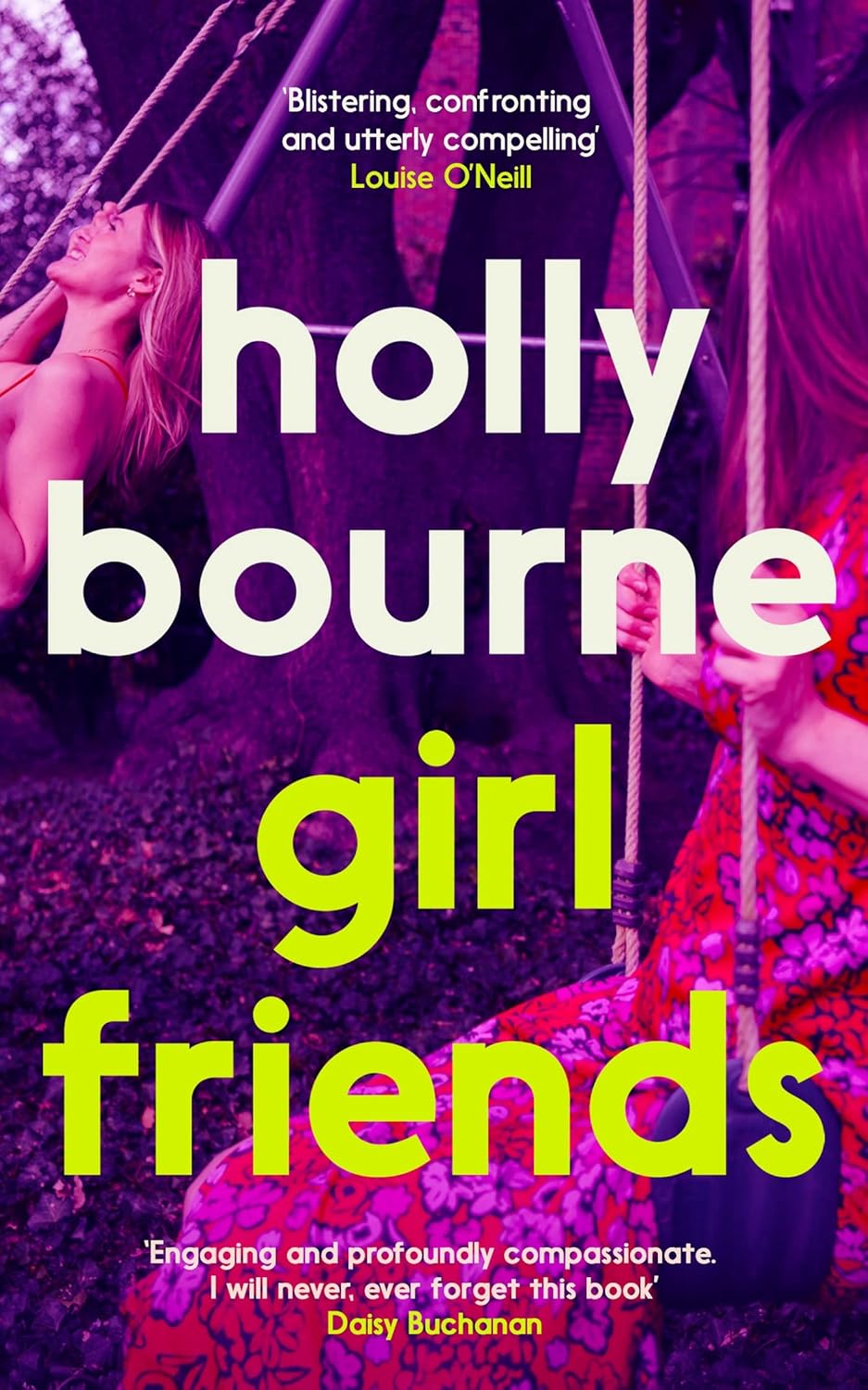
‘I reach out and squeeze her hand, and remember everything we’ve lived through together. The normal things we endured as we grew from girls to women…Of the childhood films we grew up on, and loved, and knew all the words to, where, at the end, a girl would always get chosen for looking the prettiest compared to all the others. Reading magazines that told you to mirror men’s body language, and hum on their dick when you went down on them, that turned into books about how to get them to commit by not being yourself…Of pole-dancing lessons as a great way to get fit, and actually, if you want to be really cool, come to the actual strip club too…Boys not wanting to be with you unless you fuck them quickly. Boys not wanting to be with you because you fucked them too quickly.’
Reviewers called it ‘blistering’ and ‘confronting’, and I agree. Bourne touches on the prevalent culture at the turn of the millennium, when a generation of millennial girls came of age, the things that were normalised then that, in hindsight, were hostile and damaging to young girls. It asks us to look back at our own formative years and recognise the things we accepted as ‘just the way it is.’ The persistent messaging to self-abandon in pursuit of approval and validation from boys is the invisible thread that connects Fern and Jessica’s trauma.
The book shows that the friction between women is often just the collateral damage of a system that never intended for them to be allies in the first place. It forces the reader to examine their own biases and the ways they might still be carrying the ‘popular girl’ or the ‘insecure girl’ of their youth into their adult relationships. Bourne’s writing is sharp and cynical where it needs to be, but ultimately deeply empathetic. She manages to balance a fast-paced plot with a heavy theme, ensuring that while you are turning the pages to see what happens next, you are also pausing to reflect on your own history.
For women who have ever felt less than in the presence of a friend, or have looked back at their teenage years and wondered how we all survived that particular cultural gauntlet, this book is great. It is a powerful reminder that friendships are complex and deserve the same level of interrogation and care as our romances.